

Substack: Breaking the Language Barrier
How embracing multilingual publishing through AI-driven translation could enrich both creators and audiences worldwide.

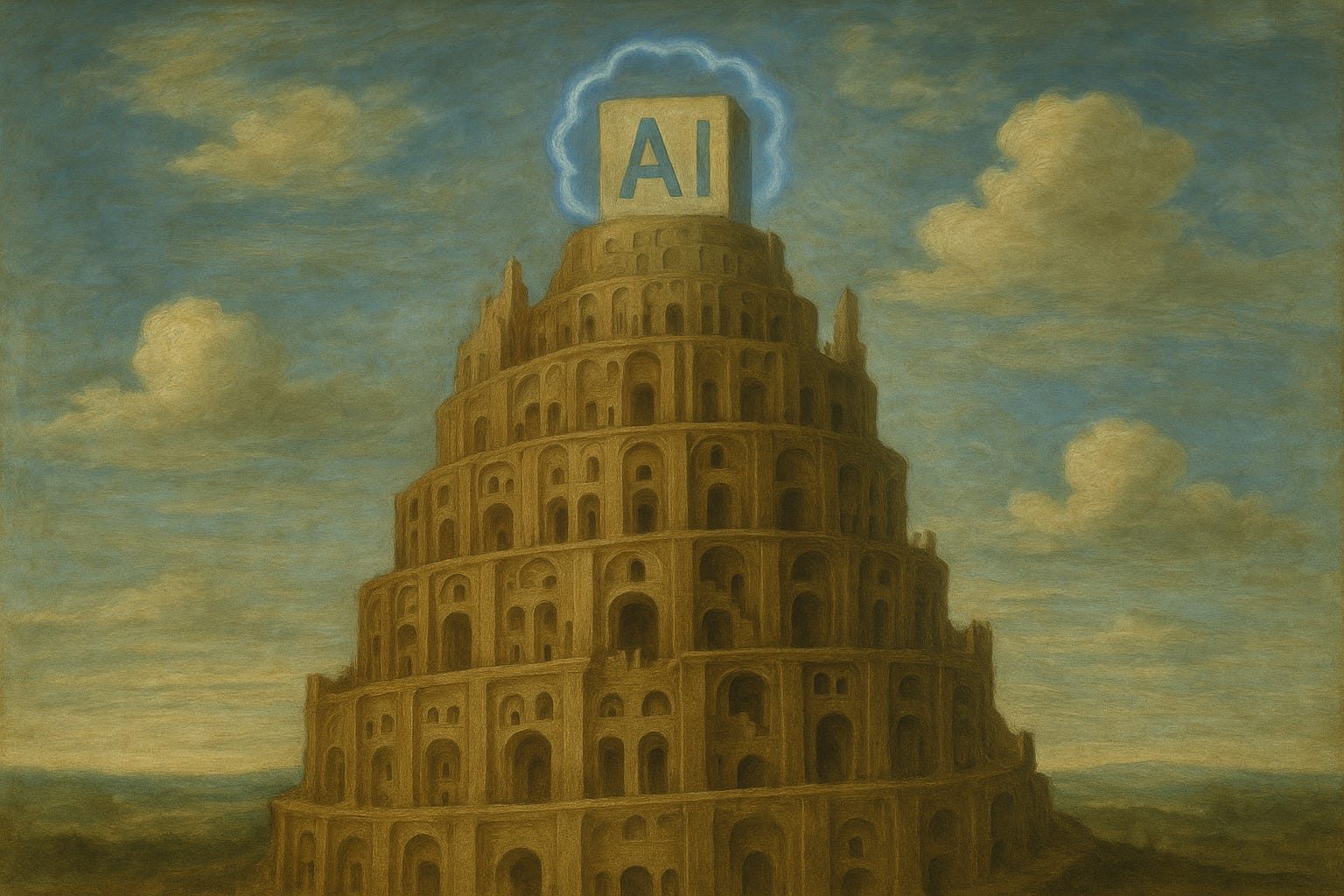
Today I'm writing on Substack about Substack. And I do so with an ironic smile because I'm using their platform to reflect precisely on something I feel is missing from it: the genuine ability to communicate in multiple languages.
Substack, like many other digital platforms born in Silicon Valley or similar startup ecosystems in the United States, carries an implicit linguistic limitation. Perhaps unconsciously, they assume people primarily speak only one language (mostly English) and expect everyone to accommodate to it. In a way, this makes sense if we consider the cultural and economic unity of the market these products initially target.
Within this context, I fully acknowledge that English serves effectively as a global lingua franca, especially in technical and scientific settings. Yet, reducing a creative and intellectual platform to a single language per publication impoverishes the cultural richness it could otherwise offer. It forces creators to choose which culture they're addressing, limiting those who express universal ideas that transcend linguistic boundaries. Encouraging linguistic diversity is a beautiful way to enrich human culture as a whole because each language encapsulates a unique worldview, distinct emotional nuances, metaphors, and ways of reasoning. This would undoubtedly enhance the depth and nuance of interactions among users on a platform like Substack.
However, we're living in fascinating times thanks to the revolution of Language Models (LLMs). Tools like ChatGPT or Claude now provide intelligent translations of exceptional quality. Why not integrate these capabilities directly into Substack? I envision a platform where articles could be available in multiple languages, automatically detecting the reader’s language preference and offering them an option to access the content translated at the click of a button: “Read in your preferred language.” Once the intelligent translation by an LLM is performed, the translated text could be stored and immediately available for future readers.
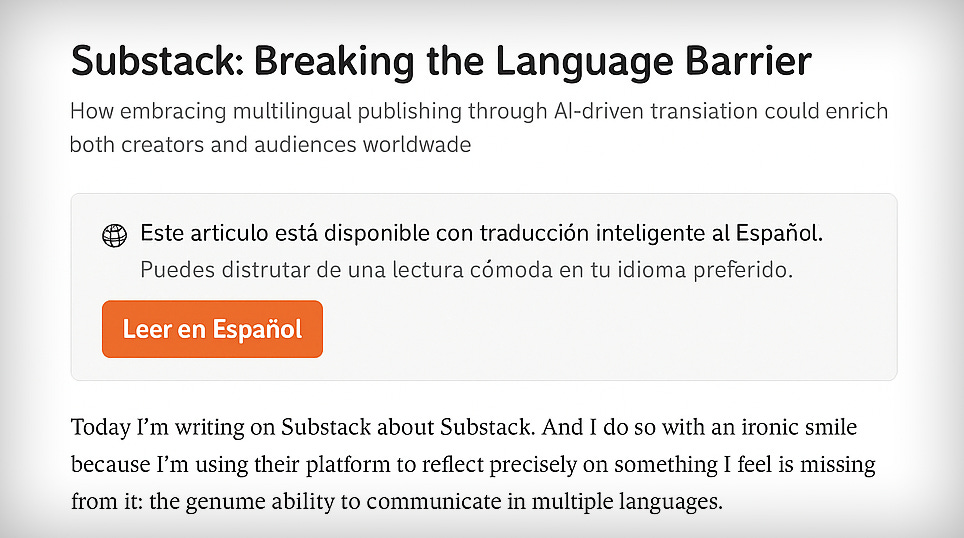
Of course, this feature should be optional. Each creator should have the option to disable this capability for various reasons: perhaps they prefer to maintain control over the accuracy of the original text or preserve stylistic fidelity that could be diluted through automatic translation.
Today, you can indeed use browser-integrated translation tools, but these create friction. Not every user is aware of or trusts these options, and the quality often isn't optimal.
I believe Substack has a wonderful opportunity here: facilitating global communication while preserving cultural and linguistic richness. Nowadays, technology enables this relatively easily, without significantly altering the internal data model. It is fundamentally a matter of vision and global awareness.
Meanwhile, I’ll keep dreaming about comfortably writing here in multiple languages, knowing all my readers can access the content naturally and effortlessly. Because our true wealth lies in diversity.
I totally agree and I’m always in doubt which language I should write in - English in order to reach a wider audience, at least as a possibility - or my native Norwegian in order to have a better control over my language, in spite of being fluent in English. As for Substack, I opted for the latter…